UX Design
Information Architecture Wireframes User Flows Animated Prototyping
Interface Design
App design Illustrations
Research
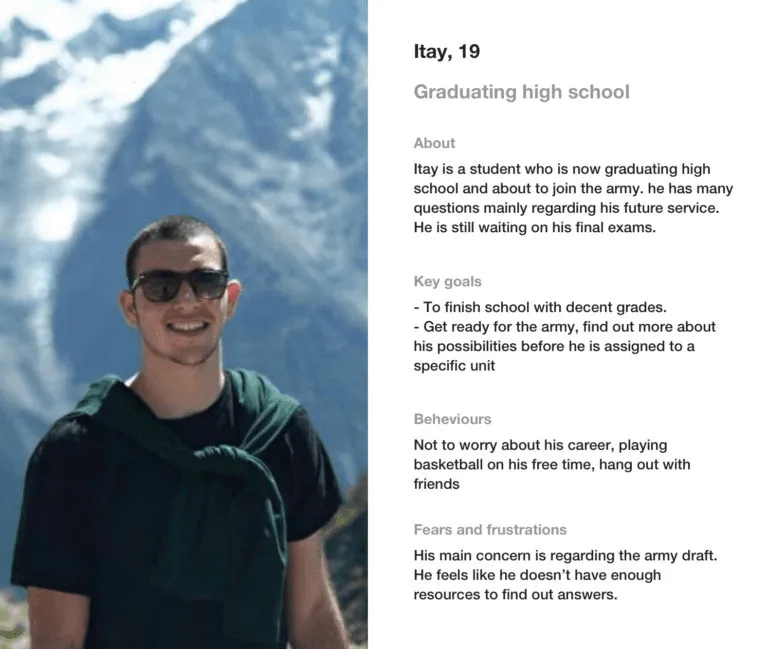
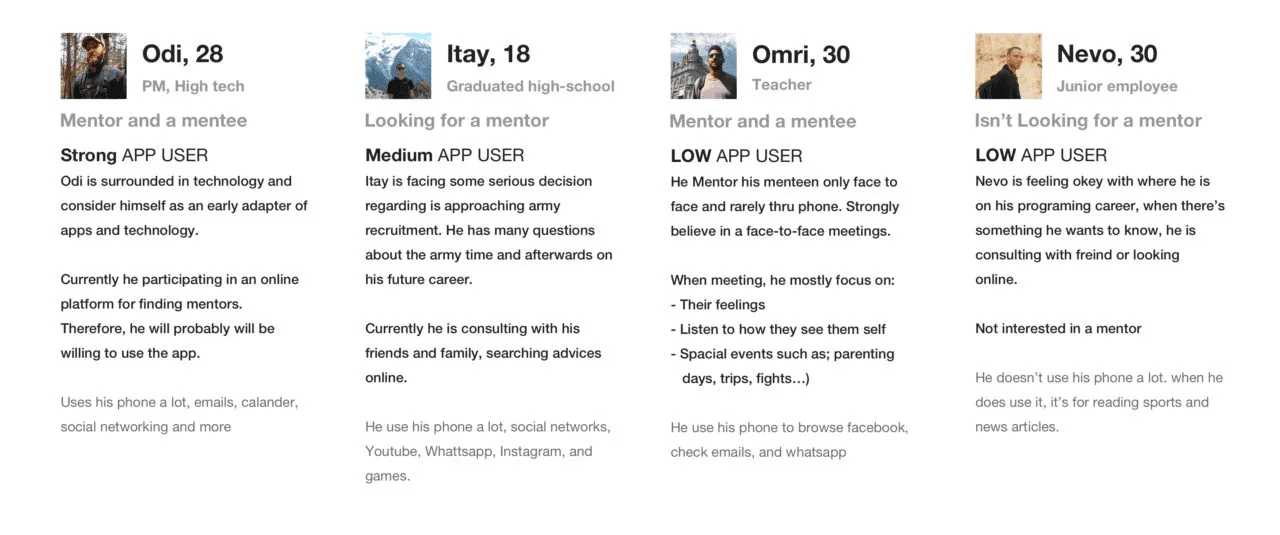
As I was researching this subject, I studied four kinds of potential users who have different needs and different goals: Student, Employee, active mentor, and proactive mentee.
This was made to create the best route to provide the best possible experience for each persona.
Scenarios
During the research, I identified several different situations and I kept my focus and developed the following:
Situation 1: The user is a mentee looking for mentors Situation 2: The user is a mentor looking for mentees Situation 3: The user is a mentor and a mentee (looking for both)
User interviews
Based on interviewing four potential users: Students, employees, active mentors, and proactive mentees I tried to get further feedback from which I highlighted the following Quotes:
- “Uncertainty is frustrating.”
- “I feel like driving on neutral. I wish to fulfill my potential.”
- “I’m looking for someone I can trust.”
- “I want to help them since I know what their difficulties are.”
Personas
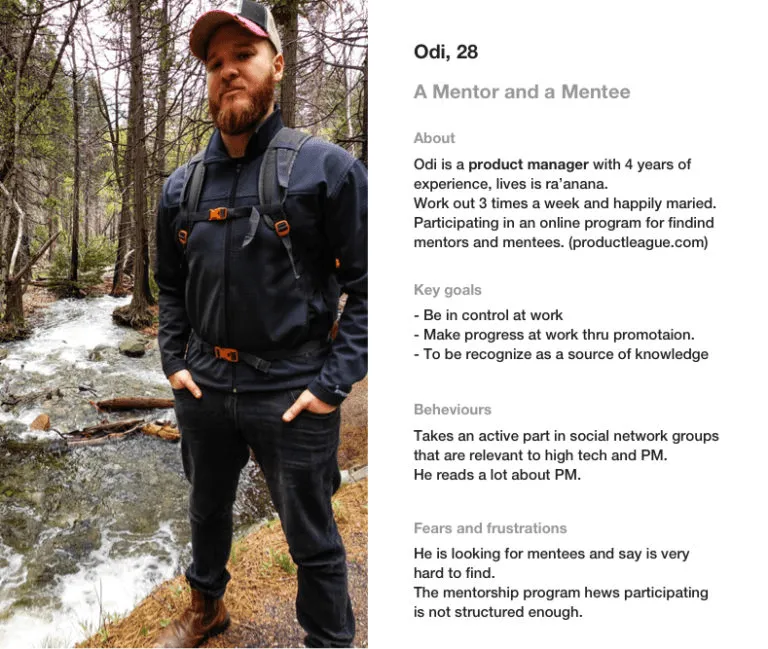
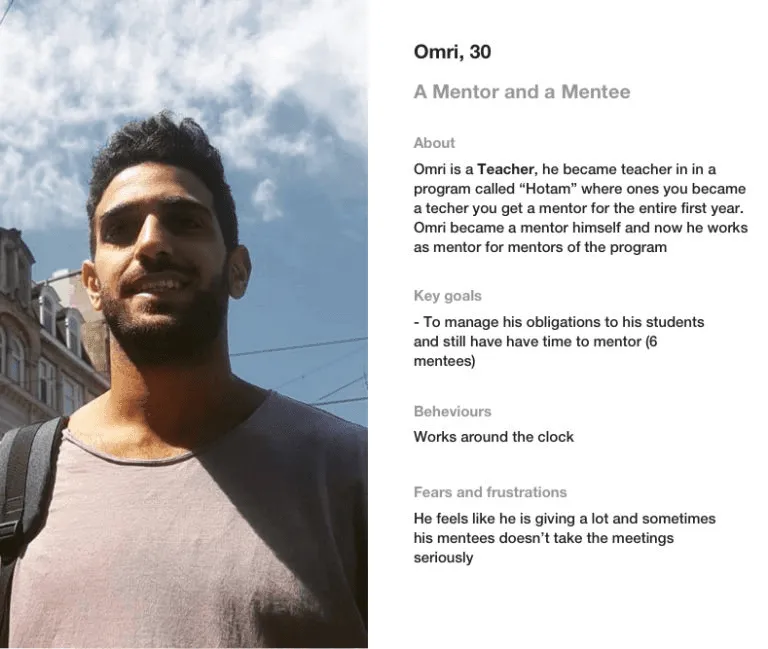
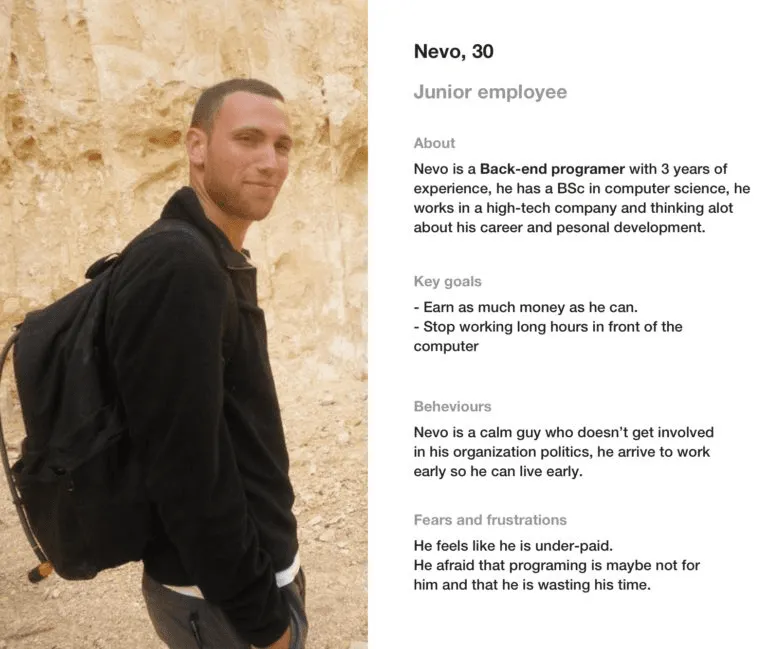
Main problems and Pain points
- Awareness, Some people are unaware of this concept and how it can benefit them in their career and personal life.
- Student and junior level, who need mentoring are usually not familiar with people from their industry to be mentored by them.
- There’s no easy way to find mentors by mentees and vice versa unless an exterior person/organization organizes it.
- Supervising & productive relationships. Monitoring is difficult and helping with the creation of a fruitful relationship.
- Mentees may expect help for something they want but not necessarily for what they need and can get disappointed.
Potential users
Users’ needs are to find guidance, someone to talk to, discover new things, and evolve.
How are people currently finding mentors?
In organizations
Formal programs – Formal mentoring programs offer employees the opportunity to participate in an organized mentoring program.
New-hire programs – New-hire mentoring programs are set up to help new employees acclimate more quickly into the organization.
High-potential programs – High-potential mentoring programs are used to groom up-and-coming employees deemed to have the potential to move up into leadership or executive roles.
Outside organizations
Naturally – Form a connection with a senior person (Informal/formal)
Online – Companies that offer to match between mentors and mentees.
Matching approaches
- Matching by committee
- Matching through self-match technology
- Speed mentoring (Mentors and mentees are introduced to each other in short sessions, allowing each person to meet multiple potential matches in a short timeframe.)
The solutions
The goal is to create a compelling and safe framework for mentors & mentees’ relationships.
Wireframes and user-flows
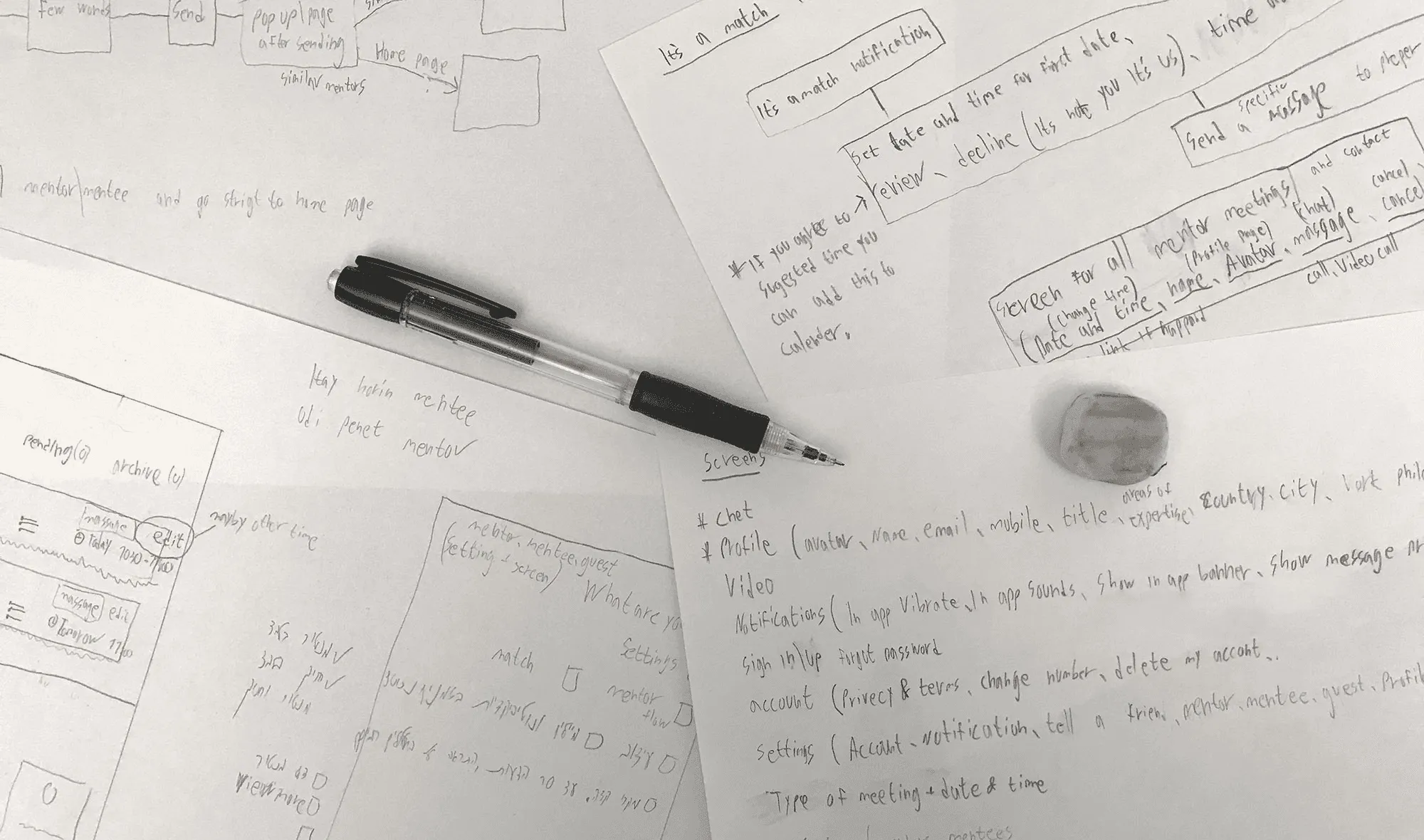
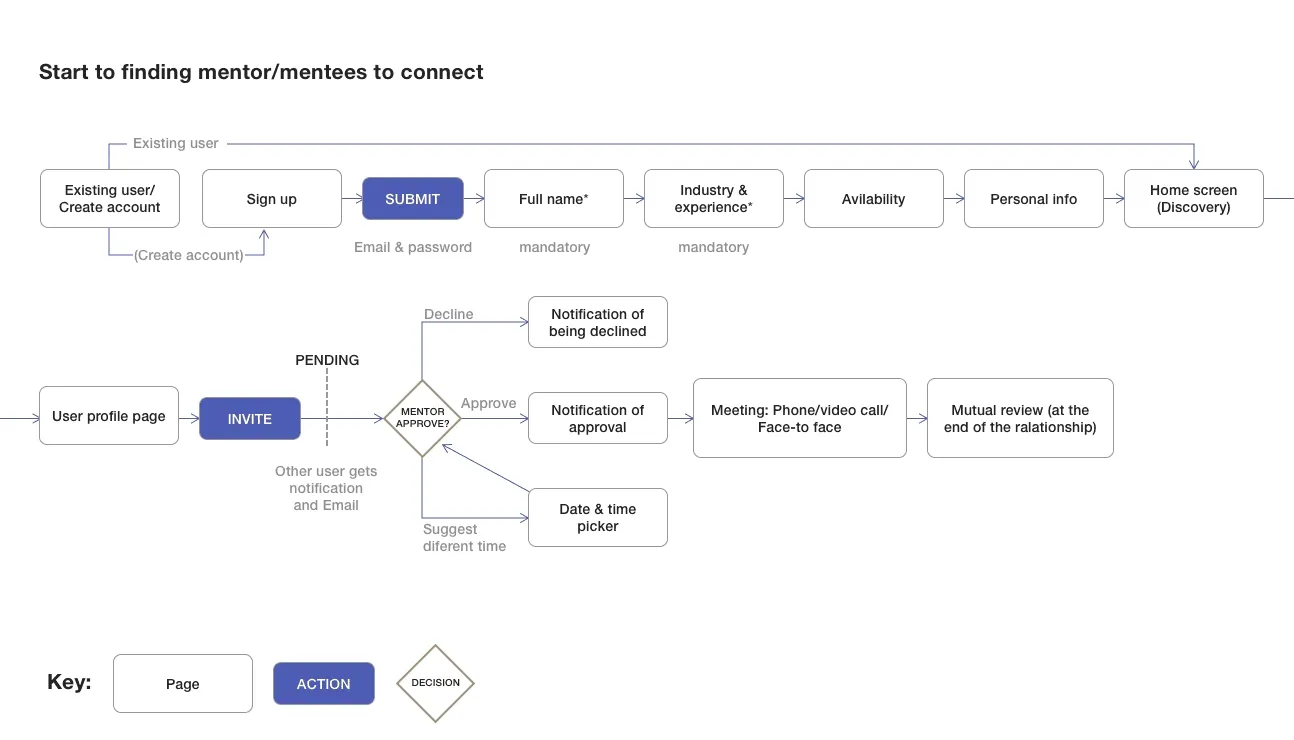
After having the info collected during the research phase, I was able to set up user flows and wireframes.
Design
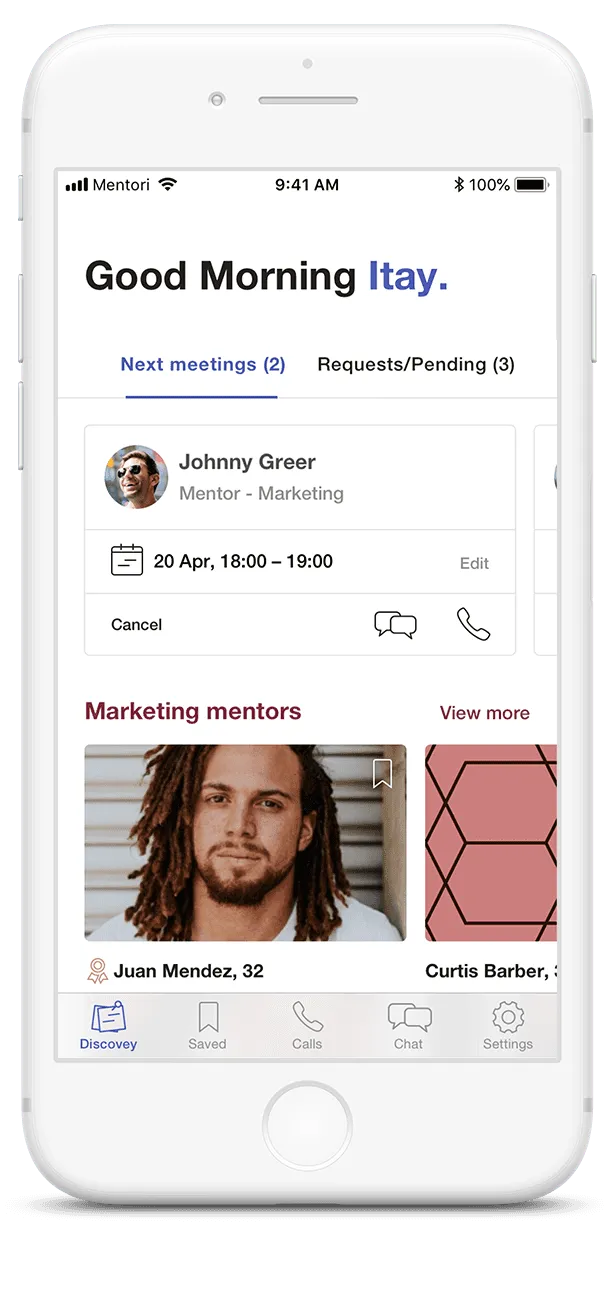
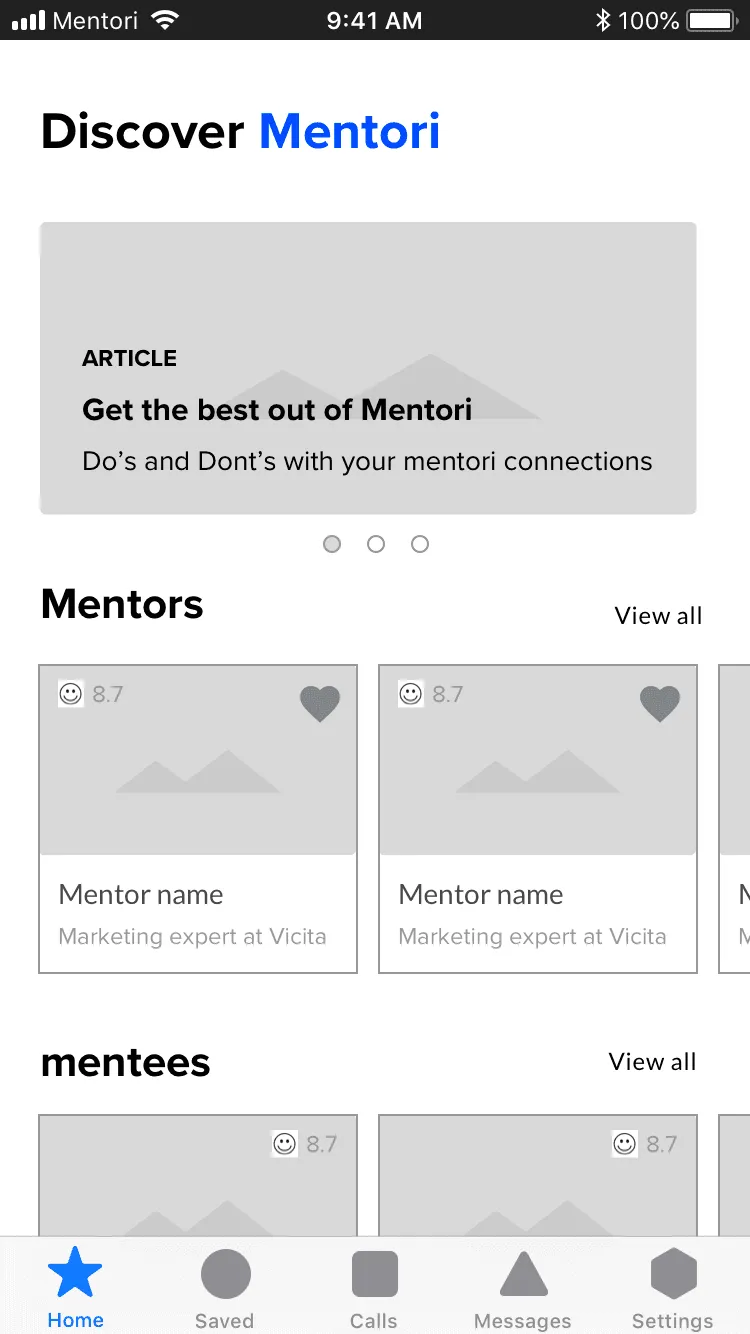
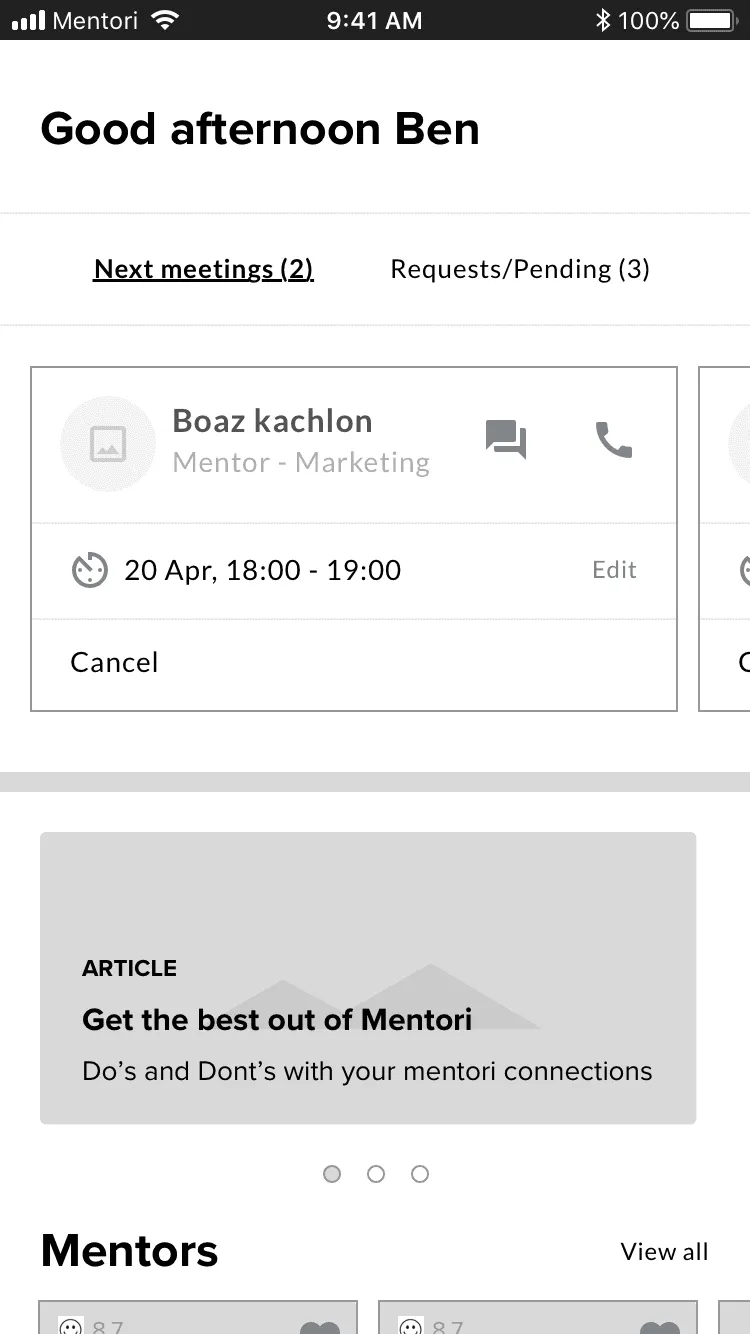
Your home feed surfaces upcoming meetings and recommended mentors by field
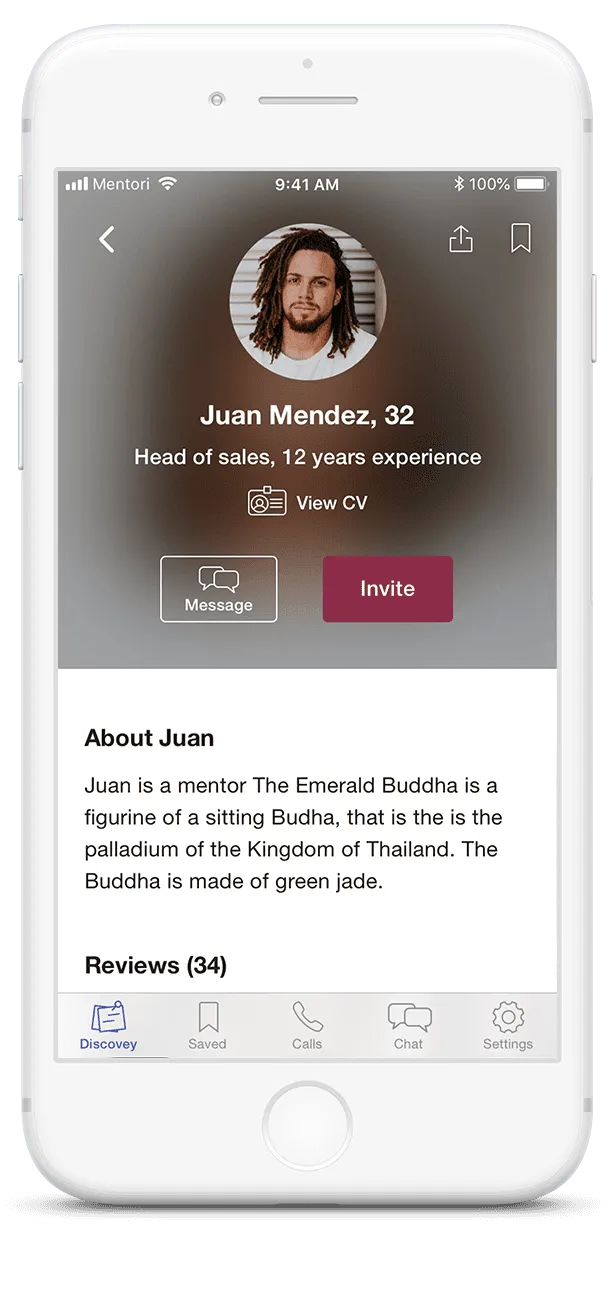
A mentor's public profile with background, experience level, and a direct invite action
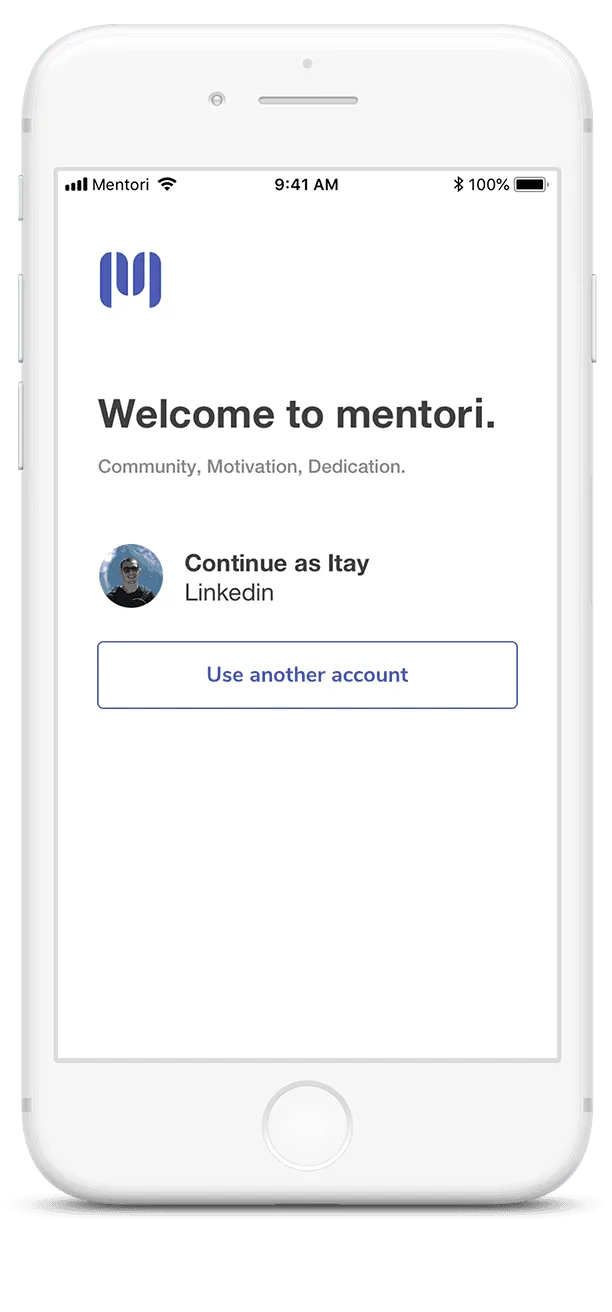
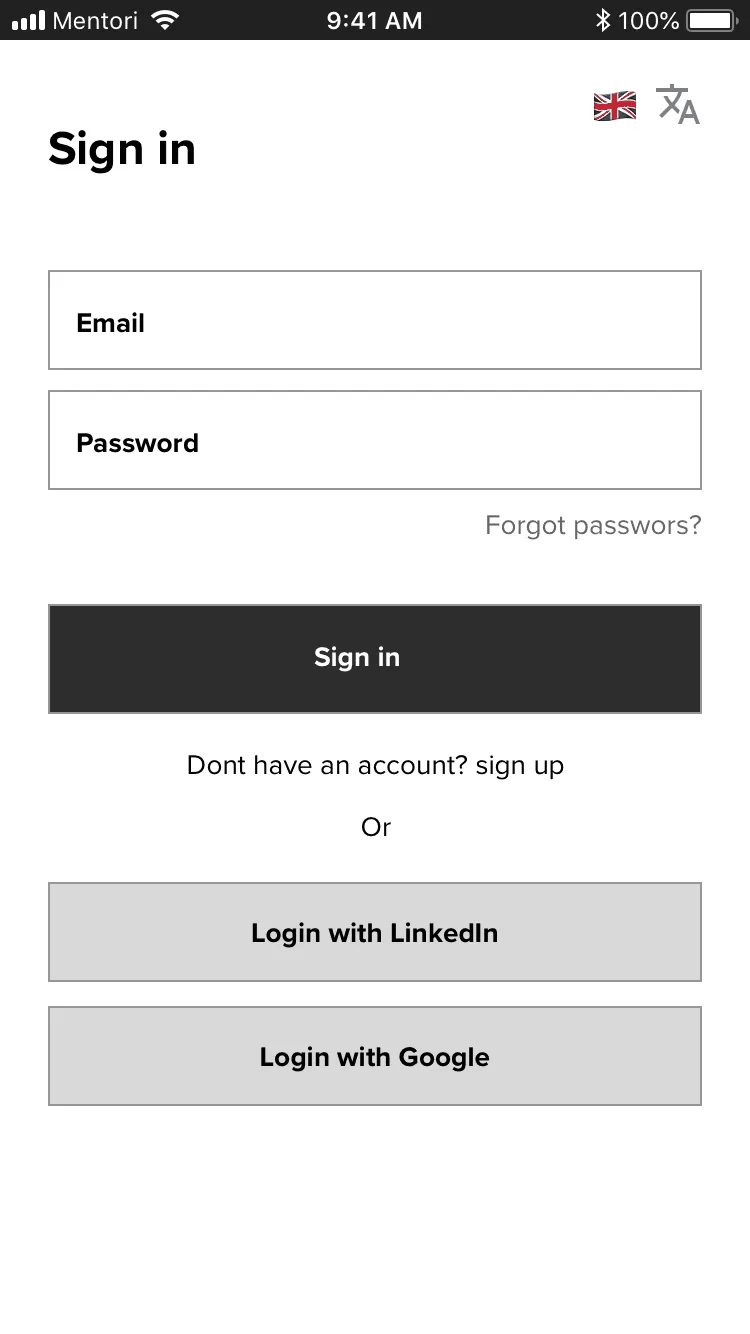
Quick sign-in via LinkedIn to get started, with the option to use another account
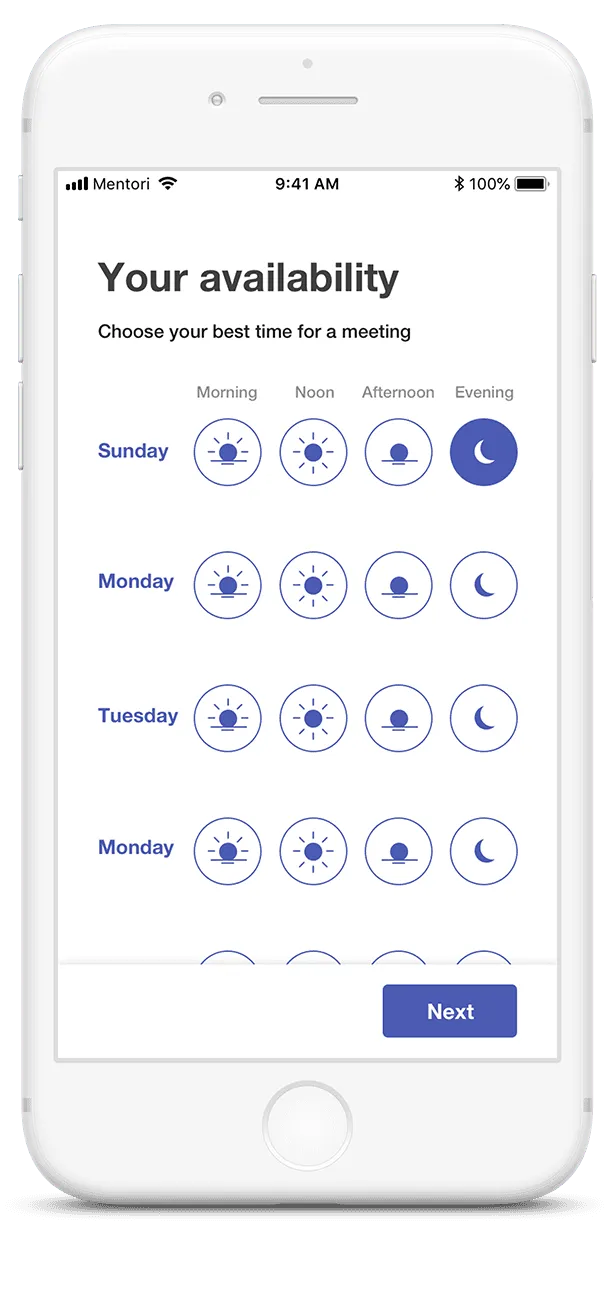
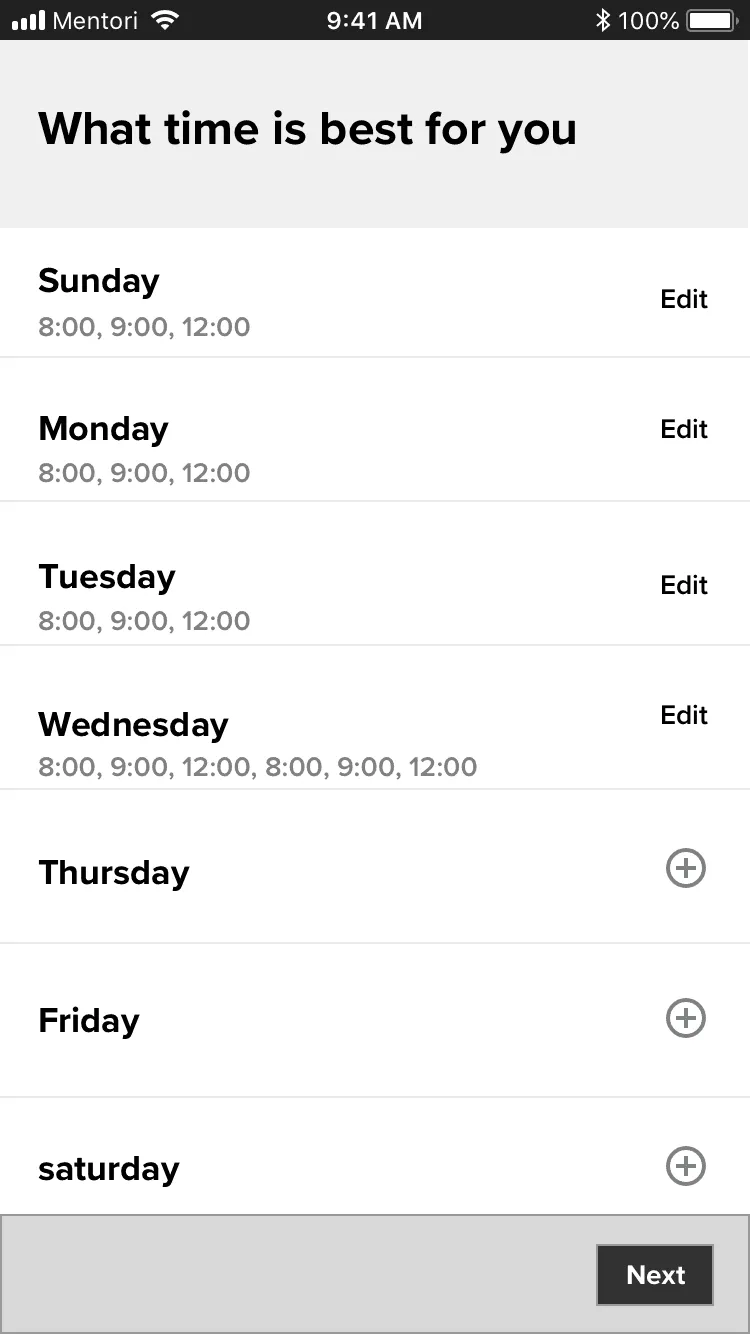
Setting your weekly availability so the app can surface the right meeting windows
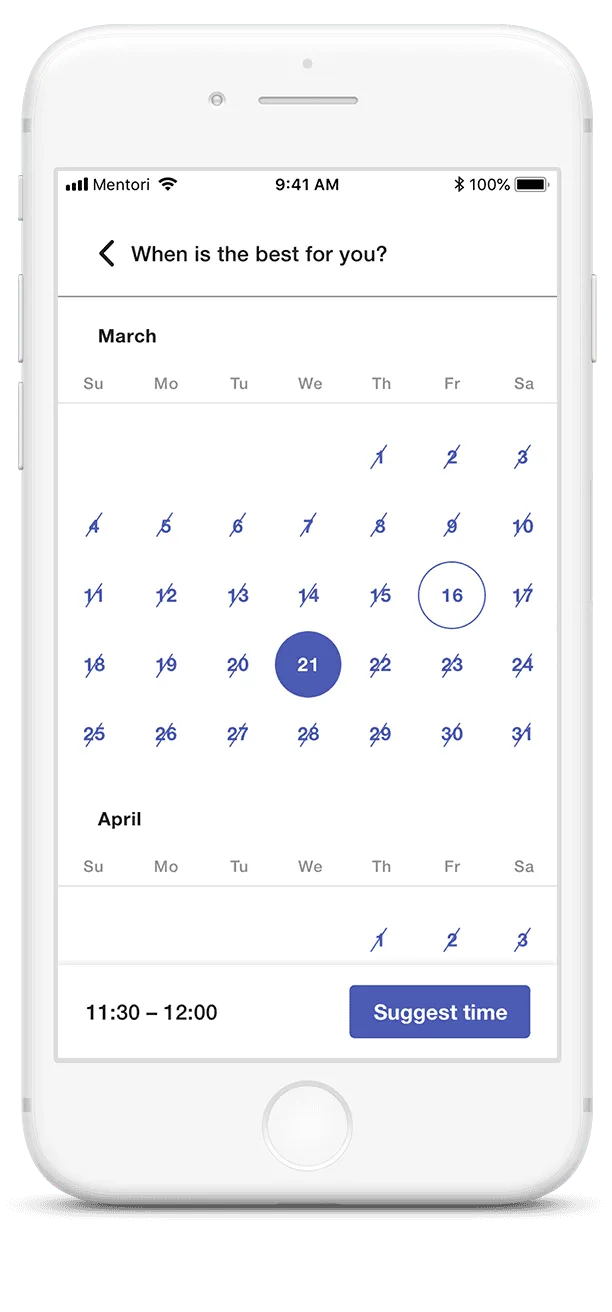
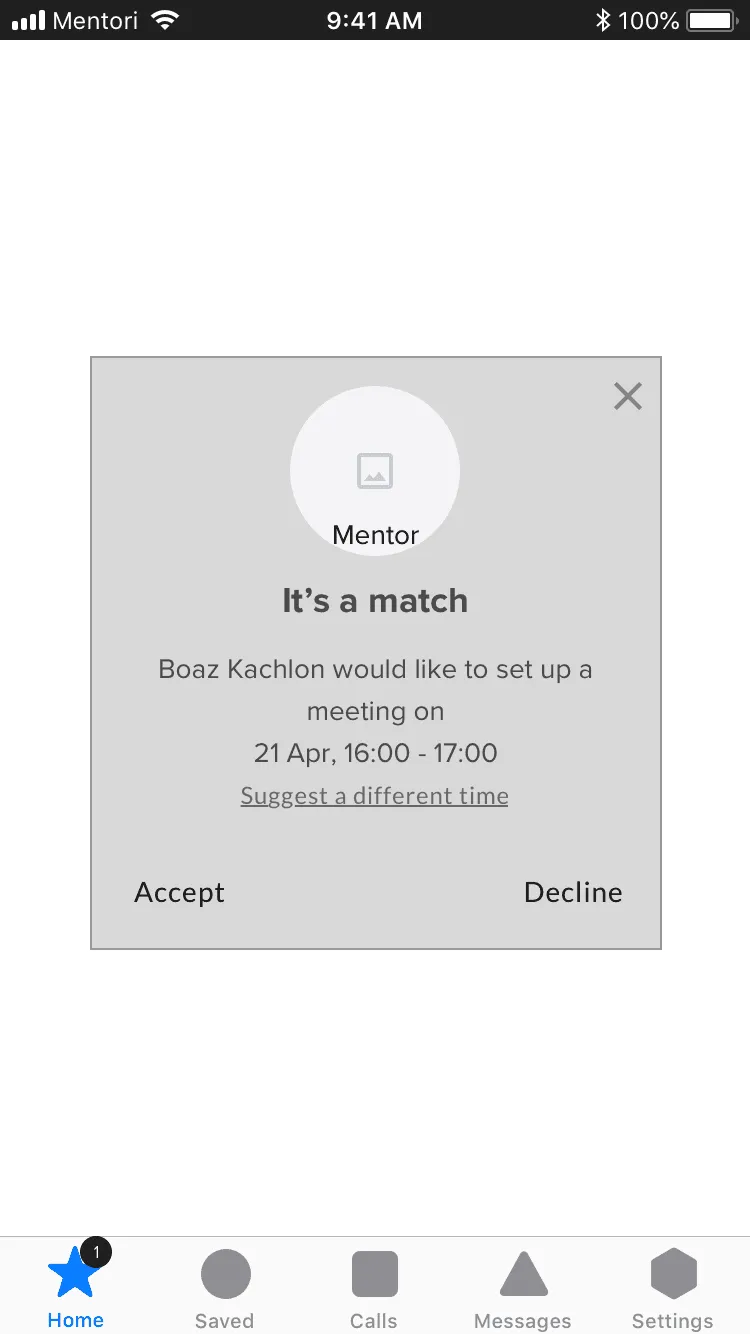
Suggesting a session time by picking from the mentor's available calendar slots
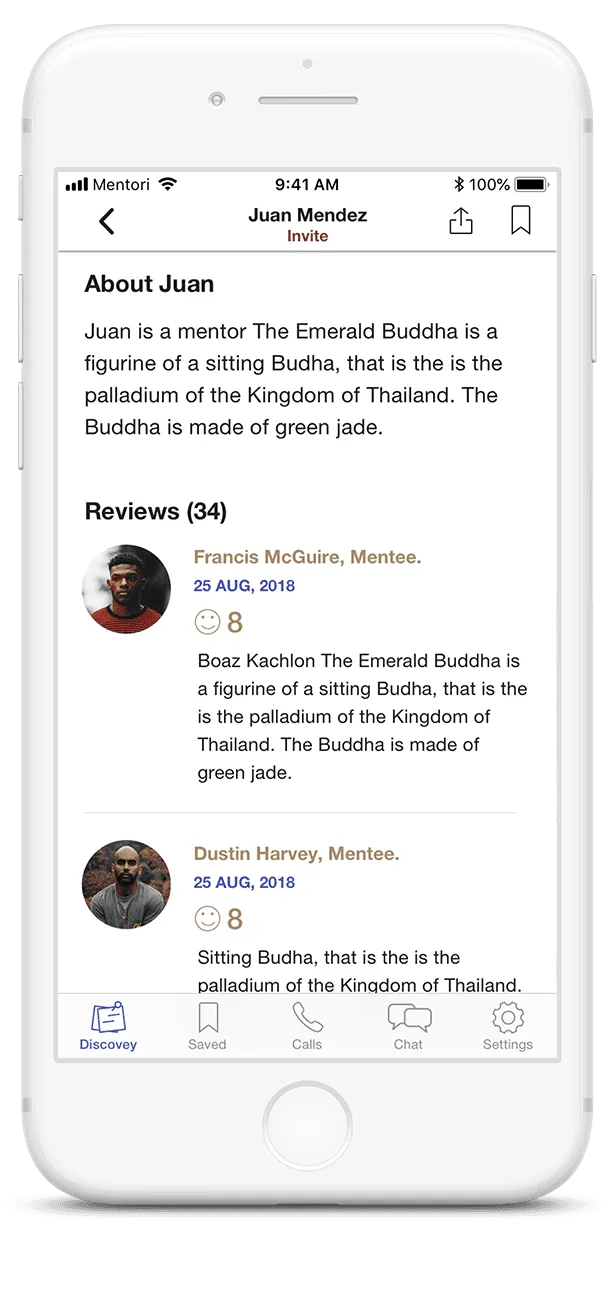
Mentee reviews on a mentor's profile, helping build trust before sending an invite